Investing in Place: From Service System to Ecosystem
December 2025
The Lab

This month, we are sharing our latest article - Investing in Place: From Service System to Ecosystem.
This article was written in collaboration with Ingrid Burkett (The Good Shift) and is part one of a three-part series on investing in place.
Place-based approaches are gaining traction as a way to tackle complex challenges. However it is still early days for such approaches in Australia and Aotearoa New Zealand. This article shares “work in progress” thinking about investing in place, and builds on our Utilising Place and Practice-based Evidence workshop with ANSZOG and The Policy Project earlier in 2025. Our article goes deeper into some of the visual tools and ideas shared in this workshop.
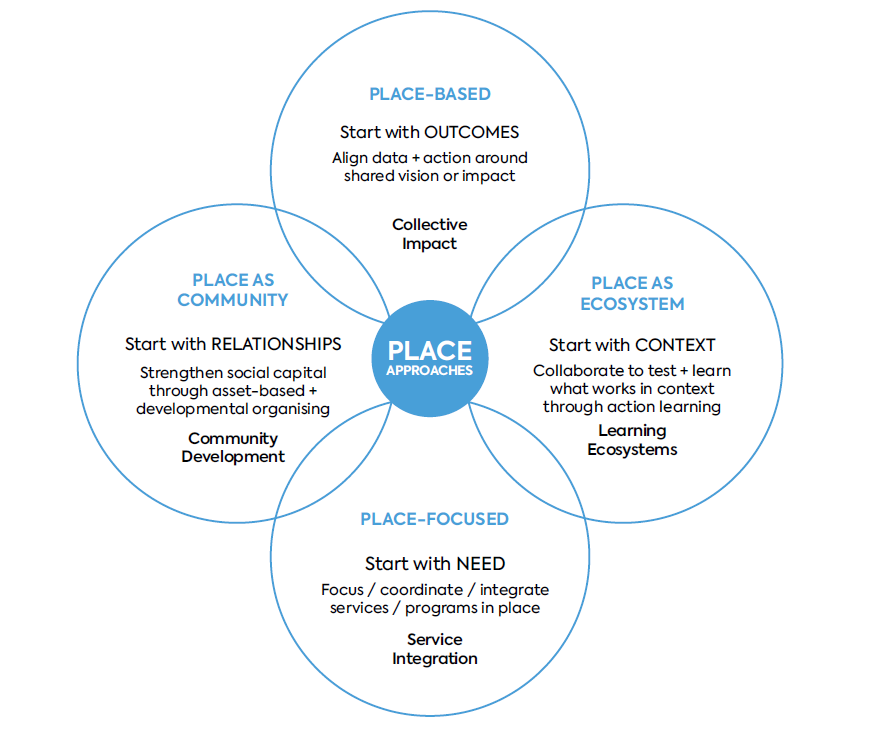
‘The Place Petal’ diagram below introduces a lens for distinguishing between four approaches to investing in place. These approaches reflect different patterns of investment we have observed. While these approaches can co-exist, they reflect different starting points and assumptions about how change happens, and in turn, how success is defined and measured.
At the most emergent end of this framework is Place as Ecosystem. This lens shifts attention away from a collection of programmes and towards understanding place as a connected system.
The ‘Butterfly Model’, developed by The Good Shift, helps make visible the multiple forms of infrastructure that shape how people live and thrive — including social, cultural, natural, economic, physical, and institutional. Currently, a service-system view (shown on the right) tends to dominate, with its focus on formal, professionally delivered interventions.
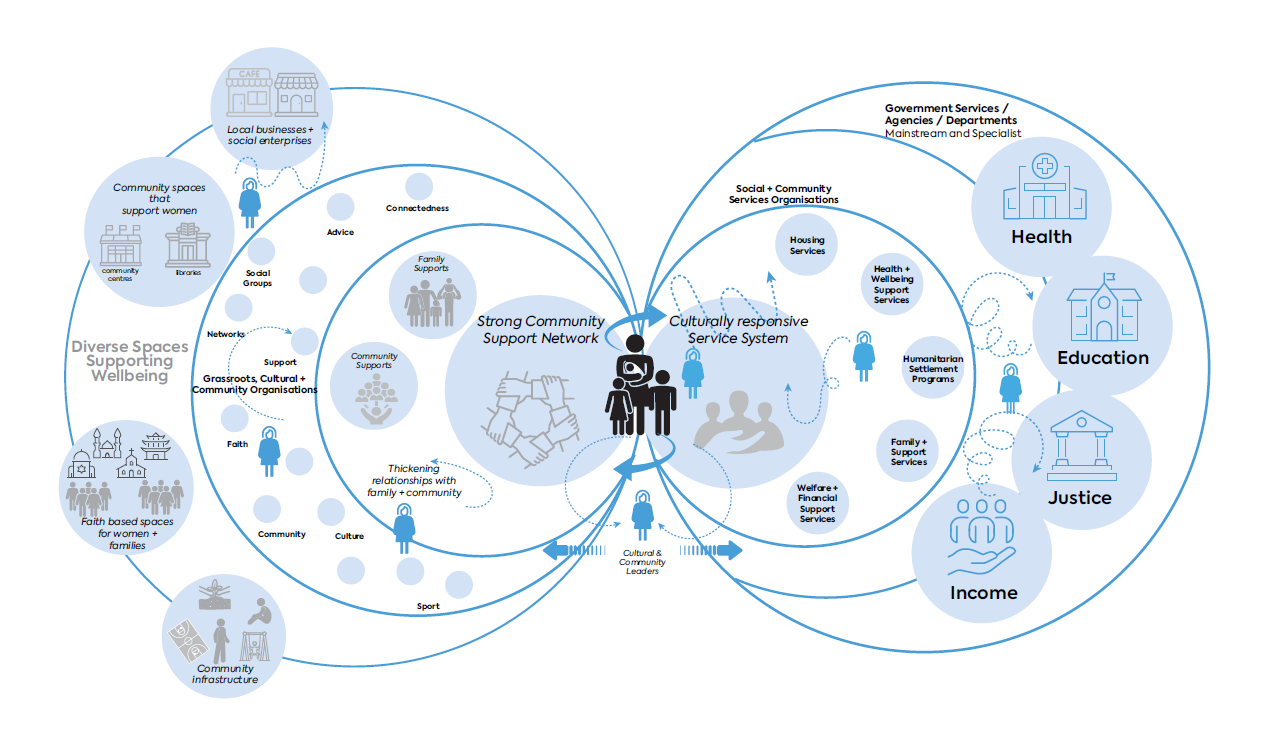
This article outlines why investment needs to extend beyond services to activate this broader and complementary ecology. It gives examples of why it is especially relevant for interconnected issues that need collective action, such as child wellbeing and the prevention of family violence.
Eight principles are offered to underpin this Place as Ecosystem lens.
Definitions about what is important, what matters, where to start and what to measure are developed in place with families, whānau and communities
Innovation may take the form of reconnecting and amplifying existing know-how, for example the power of whānau and Indigenous-led practice
Leadership and stewardship includes reconfiguring, unblocking, and better connecting resources already in place
Investment goes beyond services, to include strengthening community, social, natural, economic and cultural capital and infrastructure, relational repair and healing
Local variability in place is enabled alongside appropriate levels of regional, state or national consistency
Learning infrastructure and operating models connect local efforts into systems level activity (‘grassroots to tree canopy’) in a mutually reinforcing way
The ecosystem supports collective sense-making, feedback loops at local and systems level enable adaptive learning and evidence building
Policy, funding, and governance can be flexible and responsive to what is important in place, what already exists and its history.
The article concludes by naming the emerging potential of the approach and the shifts that are likely to be required across governance, funding, data, and systems leadership to enable this way of working.
Part two and three of this series will be published in 2026.